SaaS MVP Development: How to Build Market-Ready Products


- The main goal of a SaaS MVP is to test the right (and wrong) assumptions early.
- If you have a clear problem that needs validation, then building an MVP makes sense.
- MVPs should not be the main focus if you’re still in the process of guessing.
- MVP is not the same as a prototype.
- Prototypes are used when design or presentation matters, but not for testing assumptions, like MVPs.
Although just the basic version of your product, MVP’s benefits are plentiful. Minimum Viable Products represent a low-cost way of validating SaaS ideas. At the same time, these versions allow you to reduce business risk and save time, all with minimal financial investment. Not only that, but when built right, they can become a powerful decision-making tool, based on true user feedback.
It’s safe to say that MVPs matter for all products, but especially for a SaaS. Therefore, if that’s the type of product you’re building, then dealing with SaaS MVP development is inevitable. We’ve created a comprehensive guide to walk you through it, so read on if you wish to learn more.
What Is a SaaS MVP
At its core, a SaaS MVP doesn’t differ from any other type of a Minimum Viable Product. It’s the simplest version of the software. Its main goal is core concept testing and gathering valuable insights.
The focus on central features makes them budget-friendly, but their cost efficiency is not the only benefit. This early-stage product design allows you to assess the market demand and adapt product strategy early on.
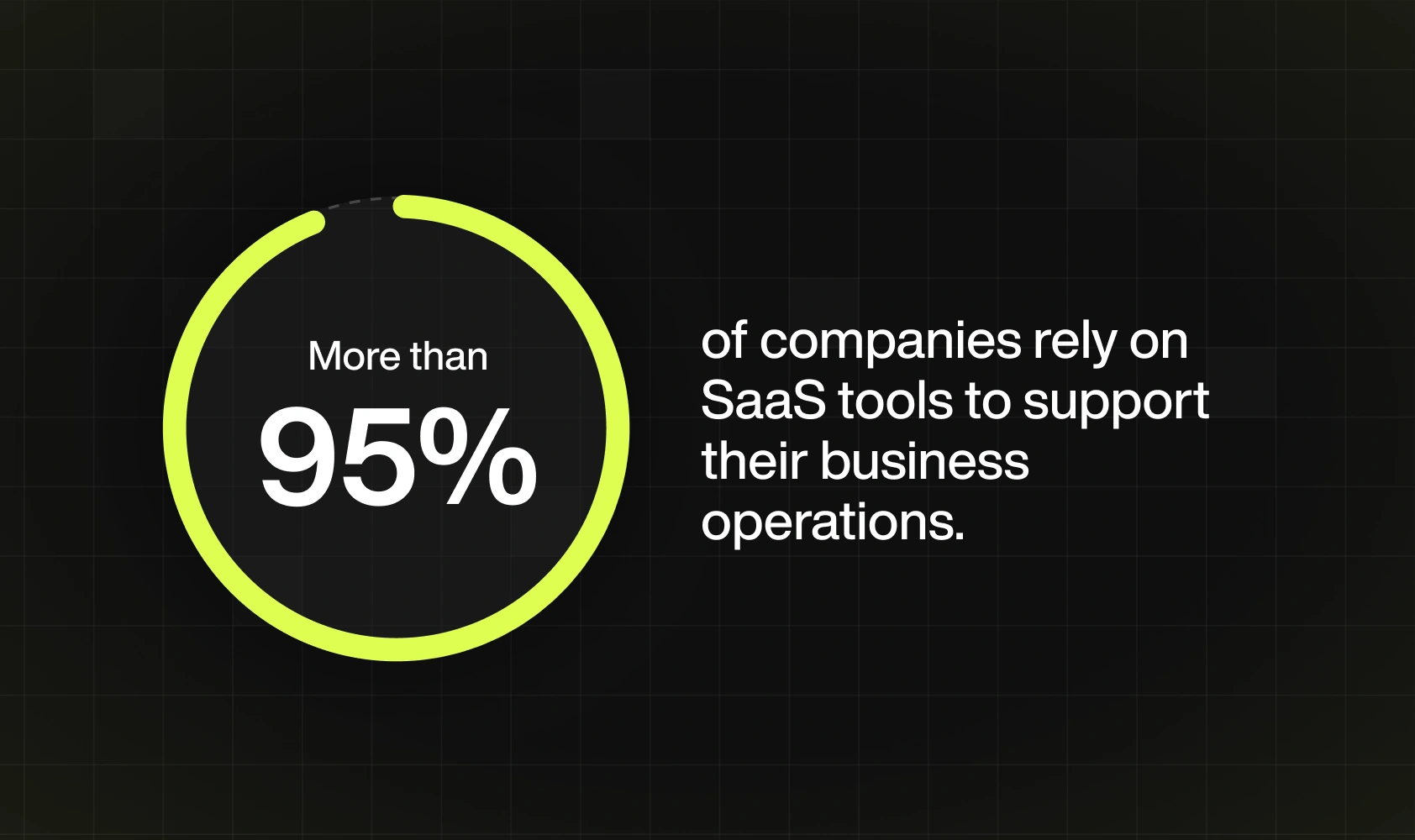
Today, we witness rising SaaS demand, which leads to a highly competitive market. If you’re in the midst of building a SaaS (or planning to), you need to think strategically - and that’s where SaaS MVP development comes in.
Is SaaS MVP an unfinished product?
It’s important to note that an MVP is not an unfinished, or even a low-quality product. As we mentioned earlier, it’s the early version of your SaaS - but a fully functional one. SaaS MVPs are built around key product features that are meant to solve some critical user problem. As complete products, they allow you to test and gather real user feedback in order to reduce investment risks.
At the same time, it’s important not to mix MVPs with SaaS beta products. Beta’s still not the final SaaS version, but it usually comes after the MVP has been validated. It includes more features and is typically closer to what the final product will look like. Their goal is different as well - instead of core idea validation, betas provide feedback on usability and performance.
Internal vs. market-facing MVPs - what’s the difference?
When building an MVP, it’s important to determine the reasoning behind it. An internal MVP design is built in order to test if the product actually works and how it runs. Market-facing MVP, on the other hand, checks if the target audience actually needs the product and if they find it helpful. These differences affect how you build your product, so it’s important to ask yourself what you want to test.
The current SaaS market
There’s no denying that the current SaaS market is overflowing. It leaves buyers with many different options to pick from, which, naturally, makes their expectations higher. Once they reach your platform, they’ll expect it to be intuitive and valuable right from the start. Not only that, but they’ll expect quick improvements and visible progress, since it has become a standard for SaaS products to update fast. When that doesn’t happen, they assume the product isn’t evolving, which leads to lost interest.
Why does differentiation start earlier than before?
If you own a SaaS, you must be aware that buyers see alternatives everywhere. Add low switching costs to that, and you’ll realize why SaaS product design needs to step up its game. The differentiation now starts at the MVP stage. Sharp value propositions and focused features are now an imperative, even in early versions.
Why SaaS teams start with an MVP
In some industries, you can launch a product and figure things out as you go, without damaging your business. SaaS products, however, are different. Some of the most important benefits MVPs bring to SaaS teams are:
- Faster validation of problem-solution fit - an MVP helps you quickly see if your product solves the problem you wanted to address, so you don’t have to wait months for a full launch.
- Lower initial development costs - building a basic version of your product is far cheaper than developing the full-featured version from the start.
- Testing ideas with minimal risk - an MVP lets you validate your concepts on a smaller budget, which reduces the chance of investing in a product that might fail.
- Stronger investor and stakeholder narratives - it’s easier to attract funding if you have proof that your idea works in practice.
- Earlier learning from real users - with these basic versions of the product, it’s possible to start gathering feedback immediately.
From idea to launch - the SaaS MVP development lifecycle
A SaaS MVP development is basically a step-by-step process that helps you build the basic version of your product and validate your idea through real user interaction. Each successful SaaS MVP follows a clear development lifecycle, with few changes here and there depending on the agency or the developers.
Problem definition & audience clarity
What is the problem your product is made to solve? It’s the single most important question you need to answer at the beginning of a SaaS MVP development. Besides problem definition, it’s also important to identify the specific audience you’re targeting, aka the audience experiencing that problem. The main goal is to avoid wasted development effort and unnecessary features.
Let’s take, for example, a basic task management tool for small teams. More often than not, small teams go through simple organizational issues (think scattered tasks shared through emails and chats), which would be the problem you want to solve. For the target audience, it could be small teams and startups that find complex project management tools a bit too much.
Feature prioritization (must-haves vs. nice-to-haves)
An MVP, as we mentioned above, contains only the features that are necessary for solving the core user problem. By prioritizing key product features, you’re still keeping user-centered design and delivering value, but in a way that keeps the MVP development process fast and cost-effective.
If we keep the example from the previous section, the core features would be:
- Creating tasks
- Assigning them to team members,
- Tracking their status (to-do, in progress, done).
Nice-to-have features (file attachments, for example) are left out of this product-building phase. Although they would further simplify the company organization, they are not critical for solving the main issue.
UX flows and product logic
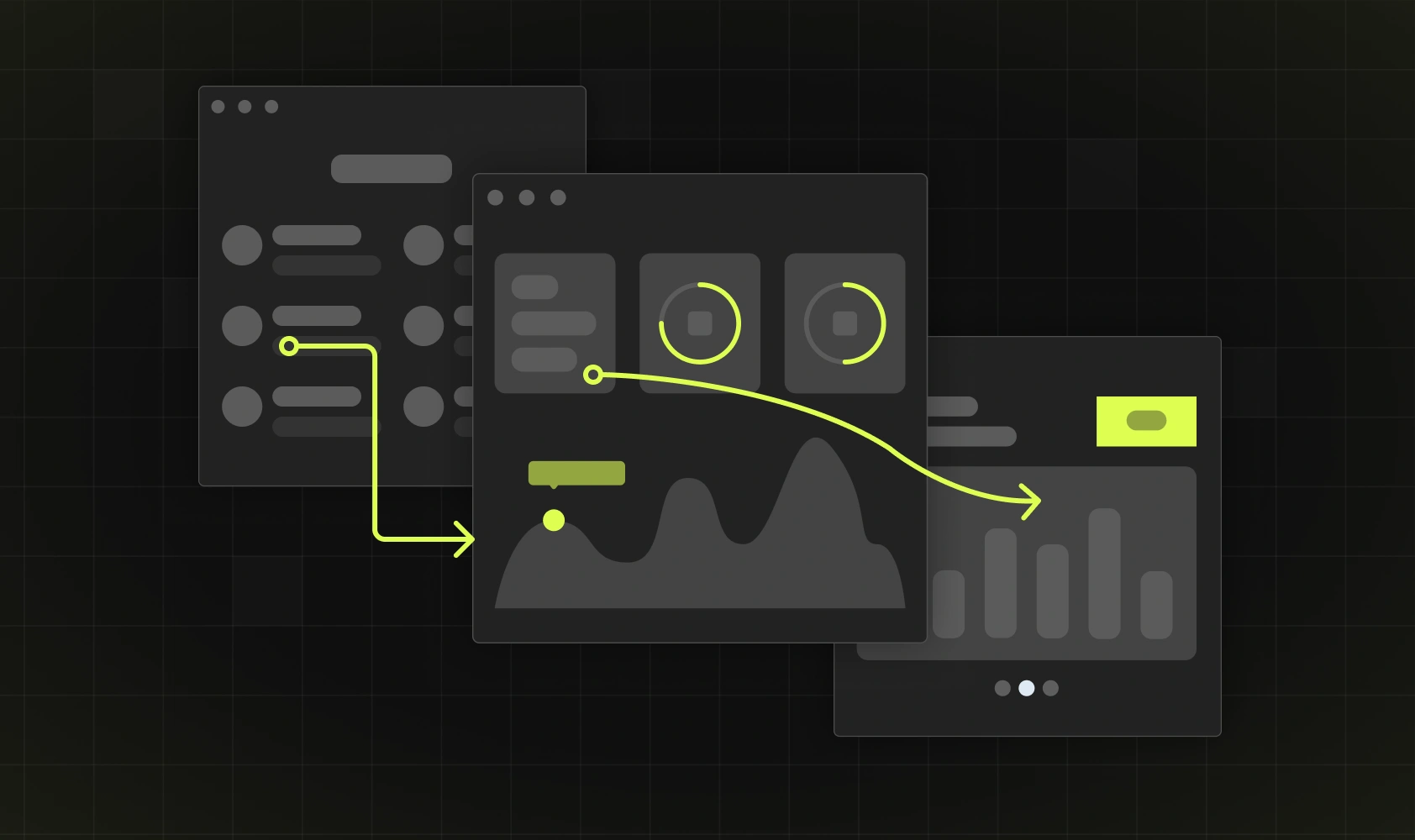
UX flows and product logic refer to how users move through the product and interact with it. This stage is all about figuring out what needs to happen at each step so everything feels natural to users. In more development-specific terms, it involves key user journeys and decision points.
In our task management platform example, UX flows would be designed to allow users to create and assign a task in just a few clicks. The product logic ensures tasks are updated in real time and are visible to everyone on the team.
Design and prototyping
Once the main ideas are shaped, it’s on the design and prototyping stage to translate them into visuals. Wireframes, UI designs, and clickable prototypes are all parts of this phase. When it comes to our imaginary task management app, wireframes and prototypes should show a simple board with task lists and clear action buttons. At the same time, it’s important to get the insights from the early feedback in order to confirm that users can use the tool without guidance.
Development and integrations
Development means bringing to life everything that was defined in earlier stages. At this point, teams usually handle:
- Frontend and backend development
- Database setup
- Basic authentication
- Essential third-party integrations (but only if they support the core use case).
For our task management tool, development would focus on building the core task board. Integrations, if existent, would be kept minimal (they can, for example, include basic notifications for task updates).
Testing, iteration, and launch readiness
If you don’t want your MVP to fail (spectacularly) once it’s live, it’s important to test it in real-world conditions. Do features work as intended, and can users complete tasks without issues? Before your SaaS goes live, the answer must be yes.
This phase is the one that helps you catch bugs right on time. However, even more than that, it’s the stage where you’ll collect early feedback and make suitable changes based on your findings. Only when the app is stable and understandable (while clearly solving the original problem), it becomes ready to launch.
When we talk about our imaginary app, testing might, for example, reveal that users struggle to find where to assign a task or forget to update task statuses. Based on this feedback, some actions would need to be taken, such as simplifying labels or changing the flow for creating tasks.
Feature prioritization for MVPs
When it comes to MVPs, certain elements must be part of the product right from the start. However, there are also elements that can wait for some further version of the SaaS product. Therefore, in SaaS MVP development, the goal is to deliver value to users with as little complexity as possible.
The main mistakes SaaS businesses make when creating their MVPs are questioning which features users would want to have. Instead of that, their main focus should be on what users wish to accomplish. Once you take a step back and look at what your product is set to solve, then it becomes much easier to select the truly necessary features.
Between the first vision and the final version of your product, you’ll have many useful ideas, but not all of them belong in the MVP. If we haven't stressed it enough, the goal of this basic version of your SaaS should be solving the core user problem, but in a way that keeps development fast and costs low. That’s why you should avoid over-engineering early. There will be plenty of time for perfect systems or future-proof architecture later. With MVP, you need simple solutions that will validate your idea before you invest more of your time and budget in complexity.
Cost expectations - what influences SaaS MVP budgets
The final cost of a SaaS MVP development is directly proportional to the time and effort invested in it. When considering how much you should spend on it, it’s important to take several key factors into consideration.
Team composition and delivery model
Are you working with an in-house team, a professional SaaS building agency, or do you plan on hiring freelancers for the job? Do you wish to go with a cross-functional team, which, in most cases, moves faster, or a specialized team that will create more room for deep specialization?
The price can vary greatly depending on your answers. Working with a full-service SaaS development agency or a large, highly specialized team is usually the highest-cost option - but it is your safest bet, as well.
Design depth vs. speed
Highly polished design takes time. Great UX is critical - there’s no denying that. That said, keep in mind that MVPs don’t need every visual detail perfected. It means you should find the right balance between usability and speed. It’s the best way to keep the costs controlled without sacrificing user experience.
Post-launch iteration needs
The same as with the final version, an MVP also doesn’t end at launch. Therefore, when making a budget, make sure to account for fixes and improvements. If not, you’ll be me with plenty of unpleasant surprises in the post-launch phase.
So, how much does everything cost?
The more you invest in your MVP, the more value and quality you’re likely to get in return. However, that does not make choosing a more affordable option automatically a mistake. A well-planned lean MVP can still deliver the core value your users need, and do so for a lower cost. At the end, it’s up to you to choose an option most suitable for your business.
How long does it take to build a SaaS MVP?
There can’t be one unique timeline that fits all MVPs. After all, these projects can be vastly different, as well as the teams working on them. To have a general idea of how long it takes for your MVP to go live, it’s important to take into consideration the scope of the project as well as the team setup. That said, there are some time ranges most of the MVPs fall into.
Simple MVPs with a small feature set and minimal integration typically take several weeks to build, while most of the standard MVPs need a couple of months to be done. More complex projects with advanced logic take even more, up to several months.
The MVP building effort most SaaS teams don’t plan for
When thinking about timelines, it’s often that teams forget some details behind the scenes that are necessary, but also time-consuming at a certain level. These details need to be planned early. Otherwise, they quickly add up and can cause unnecessary delays.
More often than not, delays do not come from tech issues, but are influenced by what wasn’t planned. When teams skip defining edge cases, permissions, user roles, or secondary flows early on, those gaps can and will resurface during development - which will slow everything down. Therefore, in order to reduce the chance of reworks and late-stage changes, make sure to plan everything upfront.
Preparing for what comes after the MVP
A well-built MVP should make it easy to identify what works and what doesn’t, and apply those insights quickly. The goal is to make the iteration simple, with the possibility of applying changes without major rework. This way, your SaaS can evolve faster after launch.
At the same time, although over-engineering is not advisable when building an MVP, keep in mind that early technical choices should support future growth. It means you should not avoid shortcuts that make later changes expensive - and that you would get with rigid data models or, for example, tightly coupled features.
In the end, it’s important to look at an MVP as a tool that helps you decide what gets built next. What you want to get from a SaaS MVP is to see what users do with it. Therefore, you need to build an MVP and use it in a way that will help you learn.
Real-world SaaS MVP examples
Each MVP is basically a validation tool designed to answer a specific question, and that question is: Is this worth building further?
That said, different SaaS ideas require different forms of validation, which leads to different types of MVPs. The examples below illustrate three common SaaS MVP approaches through well-known real-world examples - and can be seen as Saas MVP development lessons we can all learn from.
Single-core-feature MVPs
A single-core-feature MVP focuses on solving one clear problem with one essential feature, while intentionally ignoring everything else. Its goal is fast validation of demand. Examples include:
- Dropbox
- Calendly
- Zoom
All three validated demand by launching with one high-impact feature and postponing any non-essential functionality.
Workflow-first MVPs
A workflow-first MVP validates a complete user flow. It ensures users can accomplish a job from start to finish (even if the product is minimal).
- Stripe
- Zapier
- Linear
Each product proved its value by making an entire workflow usable from day one, rather than optimizing individual features.
MVPs built for internal validation before scale
These MVPs are built to solve a real internal problem first. Once validated through daily internal use, it is refined and released as a commercial SaaS product.
- Slack
- Shopify
Both products were validated through real internal usage before being scaled and offered to external customers.
Choosing the right SaaS MVP Development Company
When you want an MVP to validate your idea (not add technical depth), choosing the right partner becomes vital. Therefore, if you wish to build a successful SaaS MVP, here’s what you need to keep in mind, partner-wise:
- Product thinking vs. pure execution - besides great engineering capacity, a strong MVP partner brings product thinking to the table.
- Experience with early-stage tradeoffs - partners with experience in MVP development recognize that early-stage SaaS development is defined by tradeoffs (speed vs. quality, flexibility vs. structure, scope vs. focus).
- Ability to challenge scope and assumptions - the right partner won’t hesitate to call into question all the previous decisions in order to make your MVP effective.
- Design, development, and strategy under one roof - MVPs won’t reach their highest potential if design, development, and product strategy aren’t closely aligned.
A partner experienced in SaaS MVP development, such as Devofls, can help founders validate ideas fast and avoid unnecessary complexity. With years of experience in the industry, our agency is more than able to help teams test their SaaS idea quickly and learn what works in order to secure a successful further scaling.
FAQ
What is a SaaS MVP and why is it important for startups?
A SaaS MVP is the simplest working version of your product. SaaS MVPs contain only the features that support solving a core user problem that the product is built around in the first place. It helps startups test their idea in the real world before they commit to spending more time and funds on the final version.
How much does it cost to build a SaaS MVP?
We really can’t talk about real numbers here, because they depend on many different factors. However, a lean MVP with the right scope can, in most cases, be built on a modest budget, while a more complex and polished project would cost more.
How long does it take to develop an MVP for a SaaS product?
The same answer goes for this as with the previous question. Although we can’t talk about precise timelines, most MVPs take between a few weeks and a few months.
What features should be included in a SaaS MVP?
Only the features that solve the main problem. All those features that are nice to have, but do not directly help users do the one thing your product exists for, belong in the later versions of your product.
Is an MVP enough to raise funding for a SaaS startup?
It often is, and it’s because investors usually care more about validation than perfection.
Can a SaaS MVP be built without a full engineering team?
It’s possible. More than a huge engineering team, you need professionals by your side who have the right skills to take you in the right direction.
What’s the difference between a prototype and a SaaS MVP?
A prototype shows how a product might work, while an MVP, although basic, is a working version of your product. Prototypes are used when you need to test ideas visually, but they don’t focus on real user interaction and feedback.
How do you choose the right company to build a SaaS MVP?
Aside from going through reviews and recommendations, it’s always a good idea to go with a team that has real experience building SaaS products and MVPs.

Read next


Let’s talk about what’s next.