How to build a brand that's ready for your seed round


- Investors form a first impression of your company in seconds, and your brand shapes it.
- A seed-ready brand isn't a fancy logo. It's a clear story, told consistently, backed by proof.
- Start with positioning. If you can't explain what you do in one sentence, no design will save it.
- Your deck, website, and product should feel like the same company.
- Keep the identity lean: logo, type, color, and voice are enough at this stage.
- Avoid overdesigning, copying competitors, and inconsistency. They cost more trust than a simple brand ever will.
Investors see a lot of pitches. Most of them are forgotten by the end of the week.
The founders who stick aren't always the ones with the best numbers. They're the ones whose story is clear, whose company feels real, and whose every touchpoint says the same thing: we know exactly what we're building.
That feeling doesn't come from luck. It comes from brand.
What a "seed-ready" brand actually means
Let's clear something up. A seed-ready brand is not:
- An expensive logo
- A 60-page brand book
- A full rebrand every time you pivot
A seed-ready brand is a clear, consistent, credible way of showing up. It helps investors understand what you do, believe you can do it, and remember you after the meeting.
At this stage, brand isn't decoration. It's a signal of how you think. Clear brand, clear thinking. Messy brand, messy company. Fair or not, that's how it's read.
What investors notice first
Before anyone reads your traction slide, they're answering four quiet questions:
- Do I get it? Can they explain what you do after 30 seconds?
- Is it consistent? Do your deck, website, and product feel like one company?
- Is it credible? Do you look like a team that can execute?
- Is it memorable? Will they remember you when they talk to their partners?
Your brand either answers these for you, or leaves investors to guess.
How to build a seed-ready brand in 6 steps
Step 1: Nail your positioning
Everything starts here. Before colors or fonts, you need one sentence that explains who you help, what you do, and why you're different.
If that sentence takes a paragraph to explain, that's your first problem to fix, not your logo. This is exactly why every Devolfs project begins with strategy.
Step 2: Shape your story
Positioning tells people what you are. Your story tells them why it matters now.
A strong startup narrative usually follows a simple arc:
- The problem: what's broken, and who feels it
- The shift: what changed that makes a new solution possible
- The solution: what you built
- The proof: why it's working
- The future: where this goes if it wins
Use this same story everywhere: your deck, your homepage, your intro emails. Repetition is what makes it stick.
Step 3: Build a lean identity system
At seed, you don't need everything. You need the essentials, done well:
- Logo: simple, legible, works small
- Typography: one or two typefaces, used consistently
- Color: a primary color you can own, plus a supporting palette
- Voice: how you sound, whether that's straightforward, bold, or warm, and applied everywhere
That's it. A lean system is easier to apply consistently, and consistency matters more than complexity. (For a deeper look, see B2B SaaS branding strategies.)
Step 4: Align your deck, website, and product
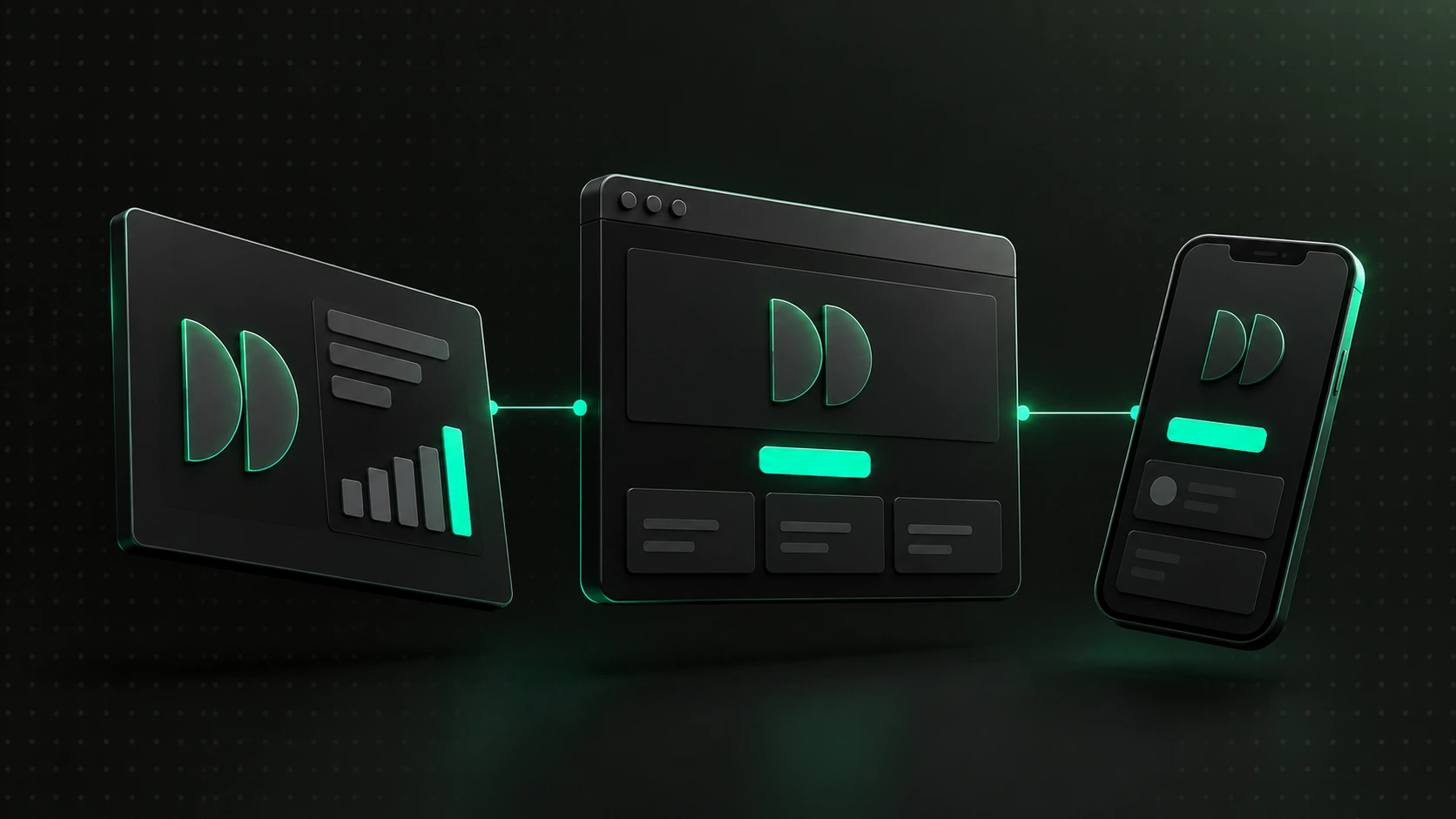
This is where most early-stage brands break.
The deck was made in a weekend template. The website was built by a freelancer last year. The product was designed by the engineering team. Three different companies, one logo.
When an investor opens your deck, clicks your website, and tries your demo, it should feel like one company. We design brand, website, and product as one system for exactly this reason. Consistency is what makes a small team look established.
Step 5: Put your proof front and center
Brand makes a promise. Proof keeps it.
Show what you have, even if it's early:
- Customer logos or pilot partners
- Short testimonials
- Key metrics such as users, growth, or retention
- Notable team backgrounds or advisors
Don't hide proof on slide 14 or at the bottom of your homepage. Make it visible early.
Step 6: Make it easy to scale
Your brand will be used by people who aren't designers: your co-founder, your first marketer, your next hire. Give them simple guidelines, ready-made templates, and a basic design system so the brand stays consistent as you grow.
Common mistakes to avoid
- Overdesigning. Complex visuals can distract from a simple story. Clarity wins.
- Copying competitors. Looking like the category leader makes you look like the cheaper version of them.
- The $5 logo. A logo that looks cheap makes the company look cheap. First impressions compound.
- Inconsistency. Different colors, fonts, and messages across touchpoints erode trust faster than anything.
- Rebranding without a reason. A rebrand should reflect a real change in strategy, not boredom.
Your seed-ready brand checklist
How long does it take?
Less than most founders expect. With clear decisions and a focused team, a seed-ready brand, including positioning, identity, and a consistent deck and website, can come together in a few weeks rather than months.
Your brand won't raise the round for you. But a clear, consistent brand makes everything else easier: the pitch lands faster, the follow-up gets remembered, and the company looks as serious as the ambition behind it.
If you're getting ready to raise, now is the right time to get your brand in shape, not after the round closes.
Book a free call with Leonardo and we'll look at your brand, deck, and website together. Want to see how it's done first? Explore our branding work and case studies.
FAQ
Do I really need a brand before my seed round?
You need a clear, consistent one, not an expensive one. Investors form an impression quickly, and a coherent brand helps them understand your company, trust your team, and remember you after the meeting.
What's the difference between a brand and a logo?
A logo is one visual element. A brand is the whole experience of your company: your positioning, story, visual identity, voice, and how consistently you show up across your deck, website, and product.
How much should a startup spend on branding at seed stage?
Enough to look credible and consistent, and not more. At seed, focus on the essentials: positioning, a simple identity system, and a deck and website that match. A full brand overhaul can wait until you have more clarity and resources.
How long does it take to build a seed-ready brand?
With a focused process, a seed-ready brand, including positioning, visual identity, deck, and website, can come together in a few weeks. The biggest factor is how quickly decisions get made.
Should I rebrand after raising my seed round?
Only if your strategy has meaningfully changed, for example a new market, product direction, or audience. Rebranding without a clear reason creates confusion and wastes momentum. Learn more about how branding helps you grow.
Can I build my startup brand myself?
You can handle early basics yourself, especially before product validation. But as you prepare to raise or launch publicly, working with a startup branding partner helps you avoid common mistakes and get to a credible brand faster.

Read next


Let’s talk about what’s next.