Vibe-coded vs. designed website: what founders need to know

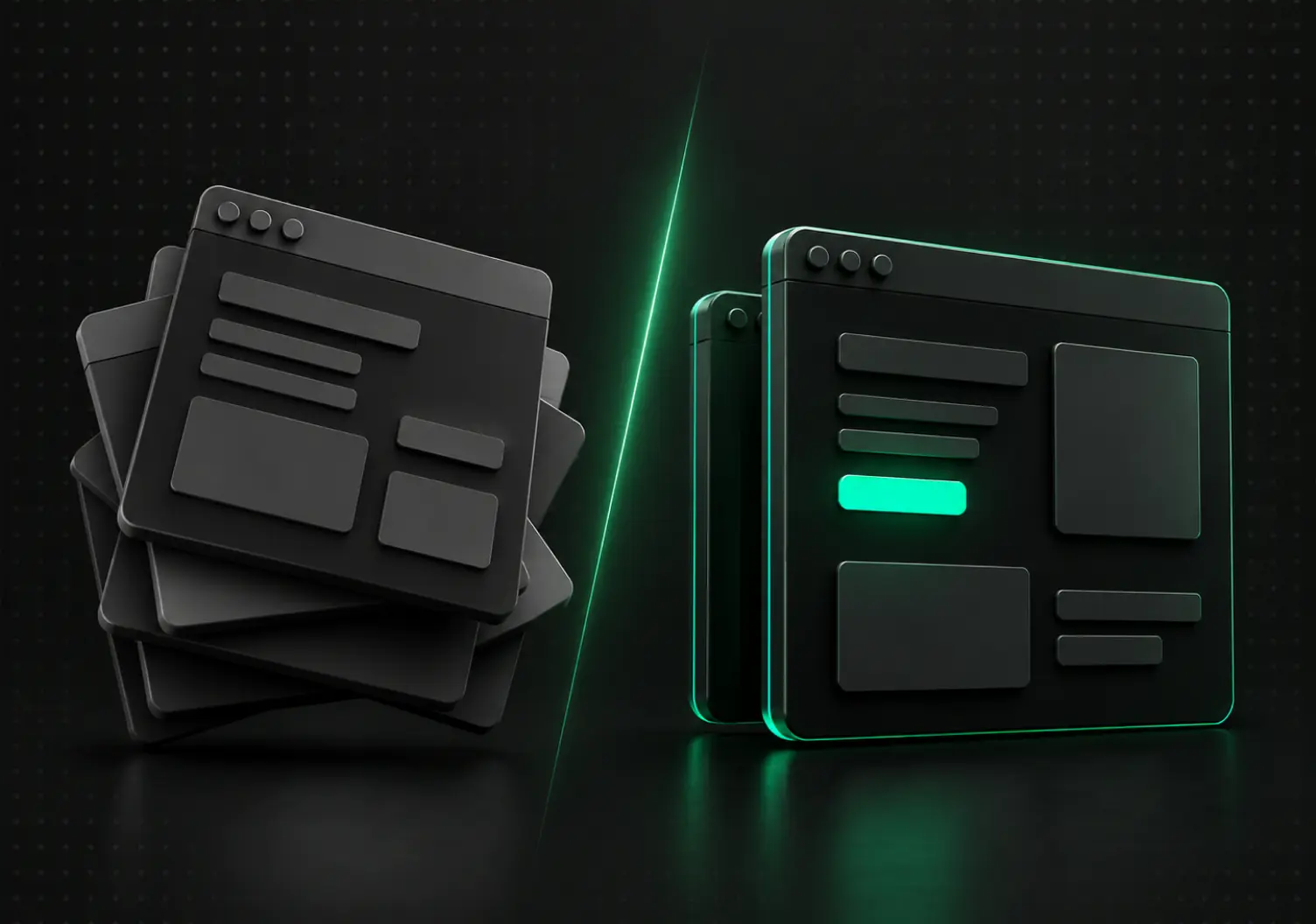

- Vibe coding means building a site by describing it to an AI tool instead of designing and coding it.
- It's great for speed: validating an idea, launching a waitlist, or testing a concept.
- It struggles with the things that actually sell: positioning, messaging, trust, and a look that's clearly yours.
- Most vibe-coded sites share the same patterns, so they blend in exactly when you need to stand out.
- If you're raising, selling to bigger customers, or launching publicly, a designed site pays for itself.
- The smartest founders use both: AI for speed, design for judgment.
You can now describe a website to an AI tool and have something live before lunch. Hero section, feature grid, pricing table, footer. Done.
So the question founders keep asking us is fair: why pay for design at all?
Here's the honest answer. Sometimes you shouldn't. But once your website has to convince someone to invest, buy, or join, "it works" stops being the bar. "It works on the person reading it" becomes the bar. That's where vibe-coded sites and designed sites start to look very different.
What is a vibe-coded website?
A vibe-coded website is a site built by prompting an AI tool in plain language instead of designing it in a tool like Figma and developing it by hand. You describe what you want, the AI generates the layout and code, and you iterate by prompting again.
It's fast, cheap, and accessible to anyone. That's a real shift, and we're not here to pretend otherwise. We use AI across our own workflow every day.
The difference is what you're handing over to the AI. With vibe coding, you're not just outsourcing the build. You're outsourcing the decisions.
Where vibe coding genuinely shines
Let's give it credit where it's due. A vibe-coded site is a smart move when:
- You're validating an idea. You need a landing page to test demand this week, not a brand next quarter.
- You're collecting a waitlist. One page, one message, one form.
- You're building internal tools. Nobody outside your team will judge it.
- You're prototyping. You want to see a concept before investing in it properly.
In all of these cases, speed beats polish. Ship it, learn, move on.
Where vibe-coded sites fall short
The problems show up the moment your website has a real job to do.
1. They all look the same
AI tools are trained on what already exists, so they default to the most common patterns. The same gradient hero. The same three feature cards. The same "Trusted by" row. Put five vibe-coded startup sites side by side and it's hard to tell whose is whose.
For an early-stage startup, blending in is expensive. Investors and buyers see dozens of products a week. If you look like everyone else, they'll assume you are like everyone else.
2. AI can't write your positioning
An AI tool can write a headline. It can't tell you which headline is true, sharp, and different for your company. That comes from knowing your market, your customer's real pain, and why you win.
Most vibe-coded sites end up with copy that sounds right but says nothing: "The all-in-one platform to supercharge your workflow." Every visitor has read that sentence a hundred times. None of them remember it.
This is why we start every project with strategy, not pixels.
3. There's no conversion thinking behind the layout
A good website is a sequence of answers. What is this? Is it for me? Can I trust it? What do I do next? Each section earns the next scroll.
AI tools arrange sections. They don't design a path. The result is a page that looks complete but doesn't move anyone toward a decision. (We break down what that path should look like in how to design a website that converts.)
4. The brand falls apart across touchpoints
Your website isn't alone. It sits next to your pitch deck, your product, your LinkedIn, and your sales emails. When the site comes from a prompt and the deck comes from a template, nothing connects. The story changes every time someone meets you somewhere new.
A consistent brand is one of the fastest ways to look bigger and more established than you are.
5. It's hard to grow from
Vibe-coded sites are easy to start and hard to scale. There's usually no design system and no clean structure. The code is hard for anyone to own. Adding a new page, a blog, or a case study often means prompting from scratch and hoping it matches.
Vibe-coded vs. designed: side by side
When a vibe-coded site is enough
Stick with vibe coding if:
- You haven't confirmed anyone wants what you're building yet.
- The site is temporary and you know you'll replace it.
- No investor, customer, or candidate is making a decision based on it.
When you need a designed website
Invest in design when:
- You're raising. Investors click your website before, during, and after your pitch. It's part of the diligence, whether they say so or not.
- You're selling to bigger customers. Enterprise buyers judge risk. A polished site signals you'll be around next year.
- You're launching publicly. You only get one first impression on Product Hunt, in the press, or in a big announcement.
- You're hiring. Great people want to join companies that look like they're going somewhere.
- Your site no longer matches your product. If you've outgrown your first version, it's time. (Here's when to redesign your website.)
The best approach: AI for speed, design for judgment
This isn't AI vs. humans. The founders moving fastest use both.
At Devolfs, AI speeds up the parts that don't need taste: exploring directions, drafting variations, building faster. Our team owns the parts that do: positioning, messaging, visual identity, and the structure that turns visitors into customers.
That's how we deliver startup websites in weeks, not months, without them looking like everyone else's. Want more on what makes early-stage sites work? Start with Startup Web Design 101.
The bottom line
Vibe coding is a great way to start. It's rarely the right way to show up when it matters.
If your website is about to face investors, customers, or a launch, ask one simple question: does this look like the company we're becoming, or just a company that exists?
If you're not sure, we're happy to take a look. Book a free call with Leonardo and we'll tell you honestly whether your current site is holding you back. Or see what we've built for founders like you in our case studies.
FAQ
What does "vibe coding" mean?
Vibe coding is building software or a website by describing what you want to an AI tool in plain language, instead of designing and coding it manually. The AI generates the layout and code, and you refine it by prompting again.
Are vibe-coded websites bad?
No. They're a great fit for validating ideas, launching waitlists, and building quick prototypes. They fall short when your website needs to persuade investors, win customers, or represent a brand that stands out.
Can a vibe-coded website rank on Google?
It can, but many AI-built sites have weak foundations: slow load times, poor page structure, and missing or duplicate meta tags. These issues can hold back rankings in both Google and AI search. A proper technical and content setup makes a big difference.
Is a vibe-coded website good enough for fundraising?
Usually not. Investors often visit your website before and after a pitch, and a generic site can make your startup look less established than it is. If you're raising, a site with clear positioning and a distinct brand is a worthwhile investment.
Can I start with a vibe-coded site and redesign later?
Yes, and many founders do. Use AI to launch and learn fast, then invest in a designed site once you have validation, traction, or an upcoming raise. Read more on when to redesign your website.
How long does it take to build a designed startup website?
With a focused team and clear decisions, a professionally designed startup website typically takes a few weeks, not months. At Devolfs, we combine AI speed with human design judgment to move fast without cutting corners. See our website services.

Read next


Let’s talk about what’s next.