Why we left Webflow and started building websites with AI
 Leonardo SusnjaAI
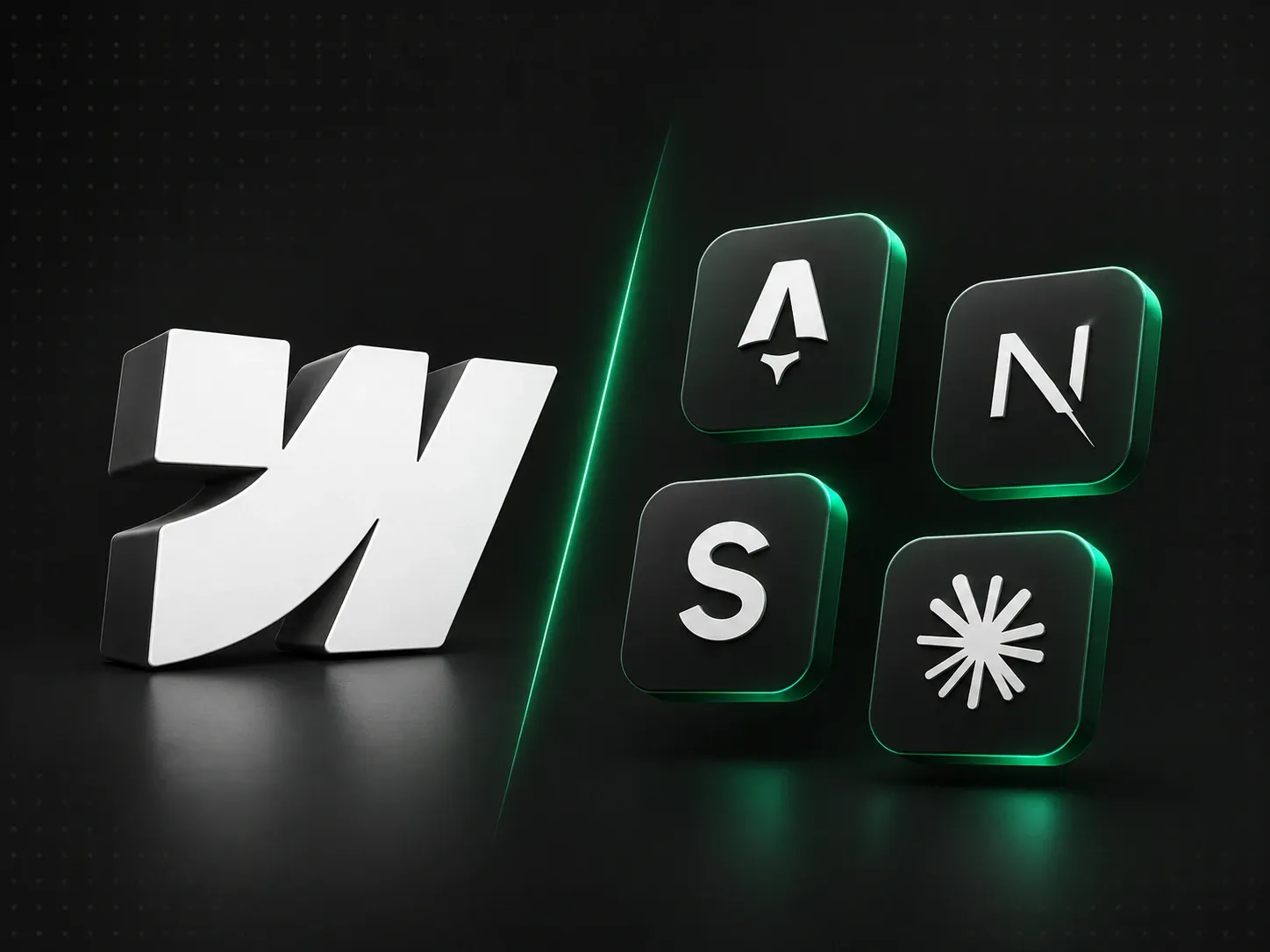

- Webflow was our default platform for four years, and it did the job well.
- We refused to switch to AI until it could match Webflow on quality, not just speed.
- The new models changed that this year. We tested them on real projects before saying anything publicly.
- We rebuilt our own website from Webflow to Astro in a single weekend.
- Strategy and design pricing stays the same. Development pricing came down.
- You can build a site with AI yourself. The limits show up in security, structure, and everything that isn't the first draft.
For four years, Webflow was where every website we built ended up. Good CMS, solid hosting, security handled, easy for clients to use. It worked, and we have no complaints about the years we spent on it.
We don't build in Webflow anymore.
This isn't a post about a tool being bad. It's about the reason we chose that tool quietly expiring, and what we did once it had.
Why we waited so long to switch
AI website tools have been loud for a while. We watched other teams move early, and we didn't.
That was a decision, not hesitation. We had one condition: we'd switch when AI could give us the same quality we were already delivering on Webflow. Not almost. The same. On top of that, it had to make the process faster and make the site easier for clients to manage afterward. Anything less and we'd have been trading our clients' quality for our own convenience.
For a long time, nothing cleared that bar. Then the models released this year did. We tested them properly, launched a few real projects, and watched how they held up in production rather than in a demo.
Two things convinced us.
The first was that the CMS stopped being necessary. We still set up Sanity where it makes sense, but the day-to-day reality changed completely. With an AI agent, a few sentences can update a hundred pages in minutes. That's not a faster version of the old workflow. It's a different thing entirely.
The second was our own website. We rebuilt it from Webflow to Astro in one weekend. When you can move your own business that quickly without losing anything, the argument is over.
Why Webflow is no longer our choice
Webflow is still a good tool. It's just no longer the right one for how we work.
Updates take too long. Small changes are fine. Bigger ones, structural updates, new sections across many pages, turn into real time. In a market moving at AI speed, that lag costs our clients more than it used to.
It needs more people to move fast. Hitting a deadline in Webflow meant more hands: more builders, more QA, more coordination. With AI, we deliver the same result with a smaller team, and the people we do have spend their time on strategy and design instead of production work.
Client editing got dramatically easier elsewhere. This is the part founders feel most. Instead of logging into an editor and clicking through pages, our clients describe what they want changed and it happens. No manual, time-consuming work while they're busy running the company.
None of that makes Webflow a bad platform. It makes it the wrong fit for an agency whose value sits in thinking, not in production hours.
The biggest benefits of building with AI
Speed that changes what's possible. We deliver websites in days, not weeks, with custom design and real strategy behind them. The research and the thinking still take the time they take. The build no longer does.
Everything is custom. We're not working around what a platform supports. If we can design it, we can build it. The question in a project is now "is this the right idea?" instead of "will the platform allow it?"
Full ownership of the code. The code is ours to control and our clients' to keep. Nothing is locked inside someone else's product.
Predictable costs. No platform subscription that changes on someone else's schedule. Hosting is the only real running cost, so pricing only moves if a provider like Vercel changes theirs.
Wring is a recent example. We delivered the whole thing in four weeks: branding, web design, and development. The part the team notices most isn't the launch, it's what came after. Changes that used to take hours or days now take minutes.
How our pricing changed
Fair question, and the answer splits in two.
Strategy and design pricing stays the same. This is where the value is and where the time goes. Positioning, messaging, brand, and the design itself didn't get faster because of AI, and they shouldn't. These are human decisions that take as long as they take.
Development pricing came down. The build is faster and there's far less back and forth in QA, so we're not charging for hours we no longer spend. That saving goes to the client.
So the shape of a project changed. More of your budget now goes into the thinking that makes the site work, and less into producing it. For most founders that's a better trade regardless of the total.
You'll also drop the ongoing Webflow platform fee, which adds up quietly over a few years.
Want the numbers for your project? Let's talk.
Why you still want an agency for a vibe-coded site
The obvious question: if AI builds the site, why hire anyone?
You can build one yourself. People do it every day. It's worth being clear about what you get and what you don't.
AI gives you a first draft fast. What it doesn't give you is judgment. It doesn't know your market, your customer, or why someone should choose you over the alternative. It'll produce something that looks like a website because it has seen thousands of them, and that's exactly the problem: it produces the average of what already exists.
What we bring is over 15 years of designing websites across very different businesses, applied on top of the AI output. Our design is done custom, in Figma, the way it always was. AI is how we turn that design into a working site. The judgment stays ours at every step: what to keep, what to throw away, and when the tool is confidently wrong.
The limits of going it alone usually appear later, not on day one:
- Security. Easy to ignore until it matters, expensive once it does.
- Code structure. A site built in prompts without a plan becomes very hard to extend.
- Sameness. Generic output is a real cost when you're trying to stand out to investors and customers.
- Everything after launch. A first draft is not a site you can grow for two years.
If you're testing an idea, build it yourself. If the site has to carry your fundraise, your launch, or your sales, bring in people who've done it a few hundred times.
The bottom line
We spent four years recommending Webflow, and we meant it every time. The tooling changed, we tested it properly, and now we recommend something else. That's how it should work.
If you're planning a website and weighing your options, or you have an AI-built draft that isn't pulling its weight, book a free call with me. Recent work is in our case studies.
FAQ
We no longer take on Webflow work. For clients who want to move, we offer a discount to migrate their site to Astro.
Yes. We moved our own site from Webflow to Astro in a weekend, and we handle client migrations the same way, carrying over content and keeping SEO intact.
No. It served us well for four years and it's still a reasonable choice for some teams. It just stopped being the right default for the way we work.
Yes, and more easily than before. You describe the change and it gets made, including large changes across many pages at once. We also set up Sanity where a structured CMS genuinely helps.
No. Our development pricing went down with the switch, and there's no ongoing platform fee.
Days rather than weeks for the build itself, once strategy and design are settled. Those stages set the real timeline.
The code, the design files, and the hosting setup. No lock-in.
Have more questions? Reach out to us, we'll be happy to help.




Available for Q4
Let’s talk about what’s next.
Book a free call with Leonardo to see how we can help you look
as big as your ambition and scale faster.


5.0

Leonardo, founder